BlogComparisons
12 Best B2B Data Providers in 2026

By Rahul LakhaneyPublished on: May 20, 2026 · 13 min read · Last reviewed: May 2026
On this page
TL;DR
Choosing a B2B data provider is one of the highest-leverage decisions a sales or marketing team makes. We rank the 12 best providers in 2026 on accuracy, phone coverage, and pricing.
Choosing a B2B data provider is one of the highest-leverage decisions a sales or marketing team makes. A bad list means wasted sequences, high bounce rates, and reps chasing dead contacts. A great one means more replies, shorter sales cycles, and cleaner CRM records. This guide ranks the 12 best B2B data providers in 2026 with honest pricing, real pros and cons, and clear guidance on which tool fits which team. We lead with the provider we think most teams should evaluate first, then cover the rest of the field so you can match the right tool to your workflow and budget.
Every vendor claims millions of records. What separates a useful provider from a liability is whether those records are accurate, fresh, and complete when you need them.
We scored each provider against six criteria so you can match the right tool to your workflow and budget.
Here is the field at a glance before the detailed rankings.
| Tool | Best for | Starting price | Free plan | Phone data |
|---|---|---|---|---|
| Enrich | Waterfall enrichment, email + phone | From ~$39/mo | Trial credits | Yes |
| ZoomInfo | Enterprise depth and intent | ~$15,000/yr | No | Yes |
| Apollo.io | All-in-one with sequences | Free; from ~$49/seat/mo | Yes | Yes |
| Cognism | European and phone-led outbound | Custom annual | No | Yes |
| Lusha | Fast SMB prospecting | Free; from ~$49/mo | Yes | Yes |
| Clearbit / Breeze | HubSpot-native enrichment | HubSpot bundle | Tier-based | Limited |
| Lead411 | Intent plus verified data | From ~$99/mo | Trial | Yes |
| UpLead | Verified data with accuracy guarantee | From ~$99/mo | Trial | Yes |
| Seamless.ai | Real-time AI list building | Free; sales-led | Yes | Yes |
| RocketReach | Broad contact lookup | From ~$39/mo | Limited | Yes |
| People Data Labs | Raw API datasets for builders | Custom/usage | No | Limited |
| Clay | Waterfall workflow builder | Free; from ~$149/mo | Yes | Via providers |
Enrich is the provider we recommend evaluating first if your real problem is match rate rather than just swapping one static database for another. Instead of querying a single source, Enrich runs waterfall enrichment: it sends each contact through multiple data providers in sequence and keeps the first verified result. That approach consistently lifts fill rates above what any single-source provider can deliver, and it returns one CRM-ready record per prospect that includes both email and phone.
Pricing is transparent and per-credit, starting at around $39 per month with no annual contract required. Enrich also ships a REST API and an MCP server, so you can run enrichment inside your own scripts, RevOps workflows, and AI agents, then write clean records directly back to Salesforce, HubSpot, or any CRM. Email verification is built into the enrichment step, so you are not running a separate pass to clean your list. For teams whose core need is clean, complete contact data rather than another seat-based prospecting UI, Enrich is the most direct fit. See Enrich pricing to start a trial.
ZoomInfo is the deepest dataset in the B2B data category, with the best North American direct dials, Bombora-powered intent, technographics, and org charts. If you need the maximum possible data depth and have an enterprise budget, it is the natural choice. The trade-off is significant: pricing typically starts around $15,000 per year on annual contracts, there is no free plan, and feature add-ons inflate costs further. It is overkill for most SMBs and early-stage teams.
Apollo.io pairs a 275M+ contact database with built-in email sequences and a dialer at a price point that is accessible for smaller teams. Its free tier lets you test data quality before paying. The database is US-strong but weaker on EU contacts and phone coverage outside North America.
Cognism is the strongest option for teams selling into the UK and Europe. Its Diamond Data tier provides human-verified mobile numbers with GDPR-first compliance and DNC screening baked in. Teams using Cognism for European outbound report low bounce rates and strong mobile connect rates. Pricing is custom and annual with no free plan, so budget conversations are needed before evaluating.
Lusha is a credit-based tool with an excellent Chrome extension that surfaces contact data directly on LinkedIn profiles. It has a free tier, transparent paid plans from around $49 per month, and a straightforward interface that requires no ramp time. The database is shallower than ZoomInfo or Apollo, but for teams that prospect account-by-account from LinkedIn, it is fast and accurate.
Clearbit is now embedded in HubSpot as Breeze Intelligence, making it the easiest enrichment choice if your team already lives in HubSpot. It enriches contact and company records automatically and powers form shortening with known data. The trade-off is ecosystem lock-in: pricing is bundled into HubSpot tiers, data comes from a single source, and it is difficult to use outside the HubSpot context.
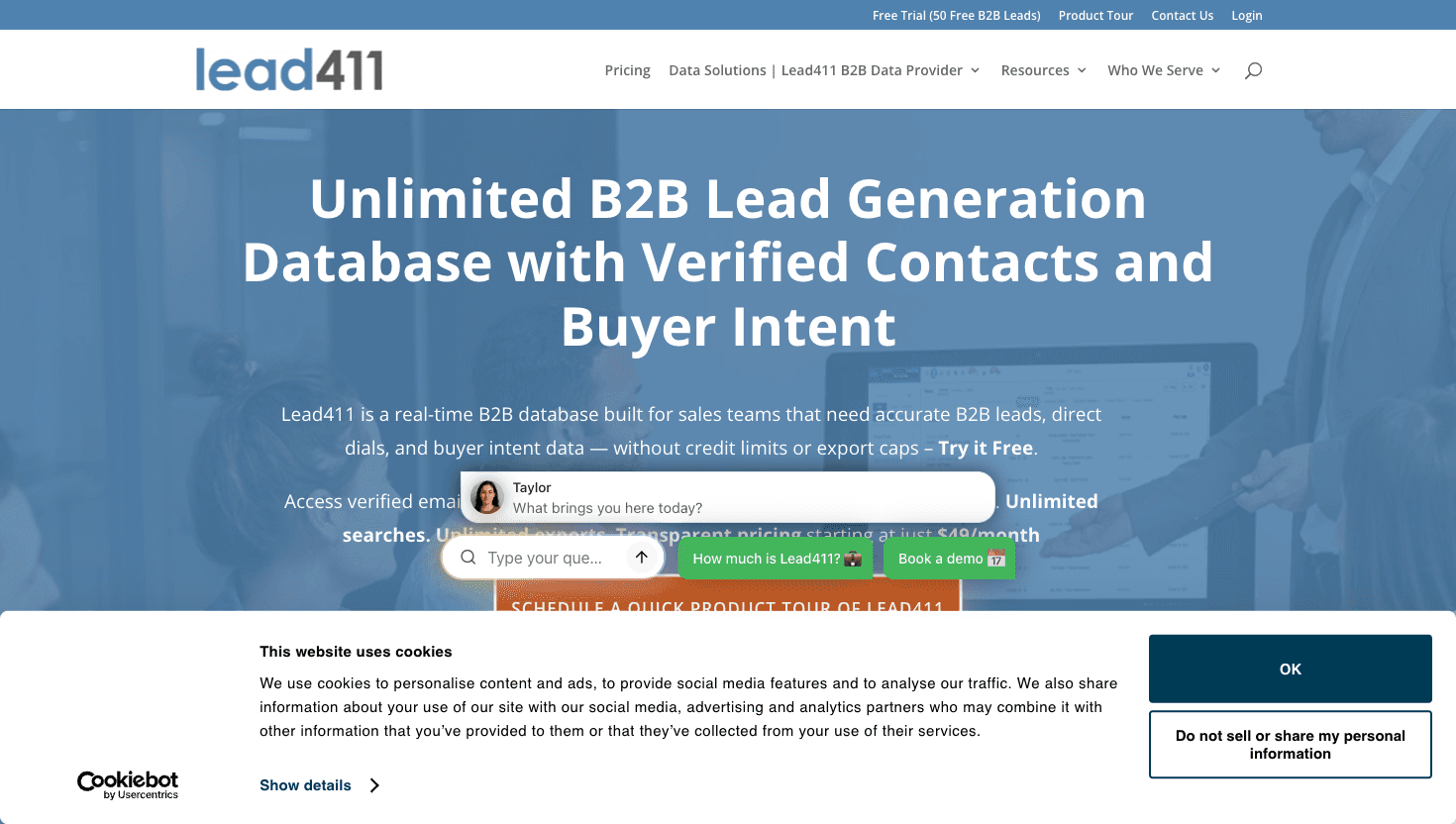
Lead411 pairs verified contact data with intent signals at a price point more accessible than ZoomInfo, with plans starting around $99 per month. It is a solid mid-market choice for teams that want buyer intent without an enterprise contract. Data coverage is smaller than ZoomInfo but the combination of verification and intent at that price point is competitive.
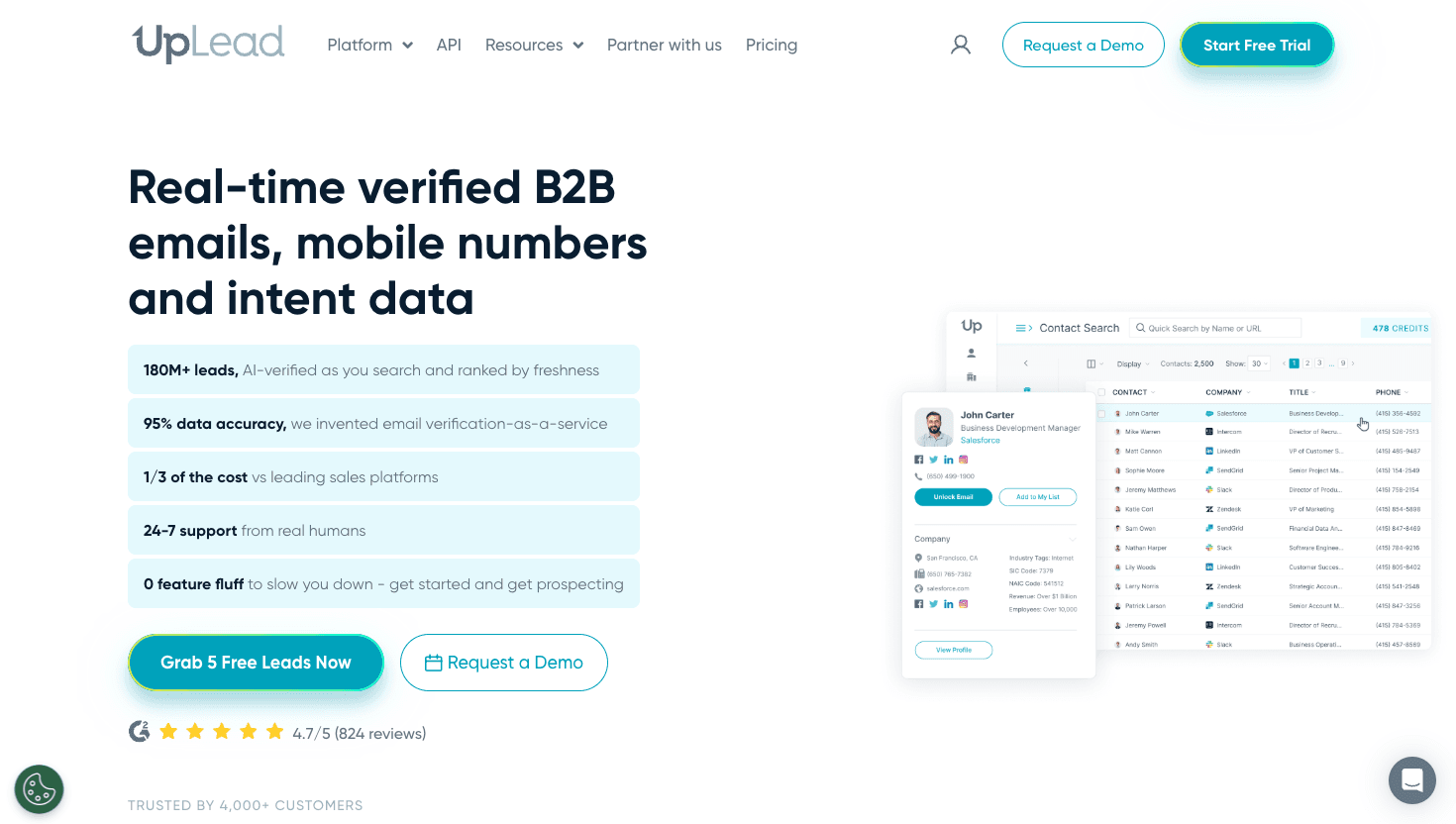
UpLead runs real-time email verification on every record at the point of export and offers a data accuracy guarantee with credit refunds for bounced emails. Plans start around $99 per month. The database is smaller than ZoomInfo or Apollo, but for teams that prioritize precision over volume and want accountability from their data provider, UpLead is a reliable choice.
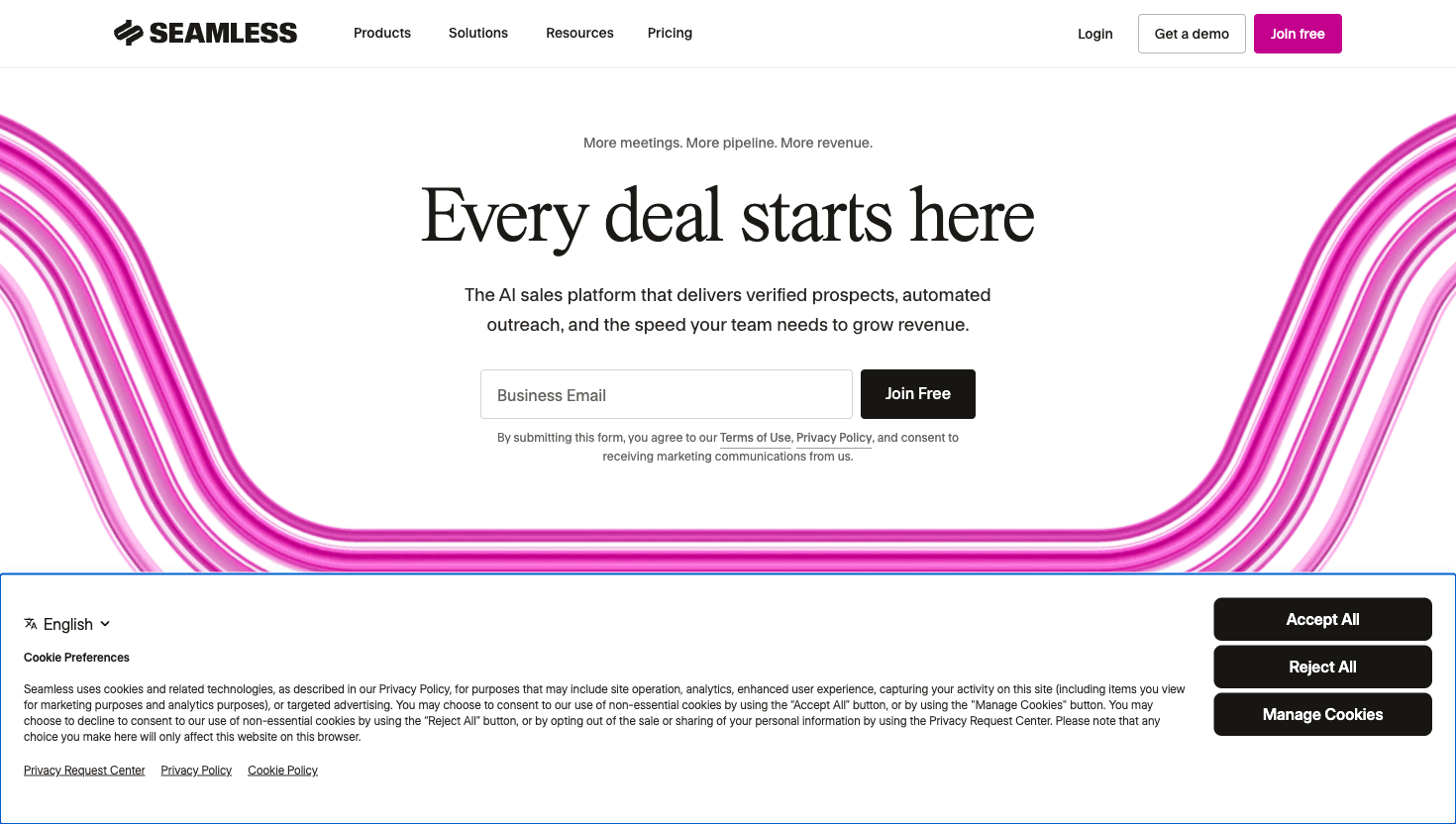
Seamless.ai uses AI to build contact records in real time rather than serving static database records. It has a free tier and lower price points than enterprise tools, which makes it popular with early-stage sales teams. Data quality is variable and users report inconsistencies, so testing on your own target accounts during a trial period is important.
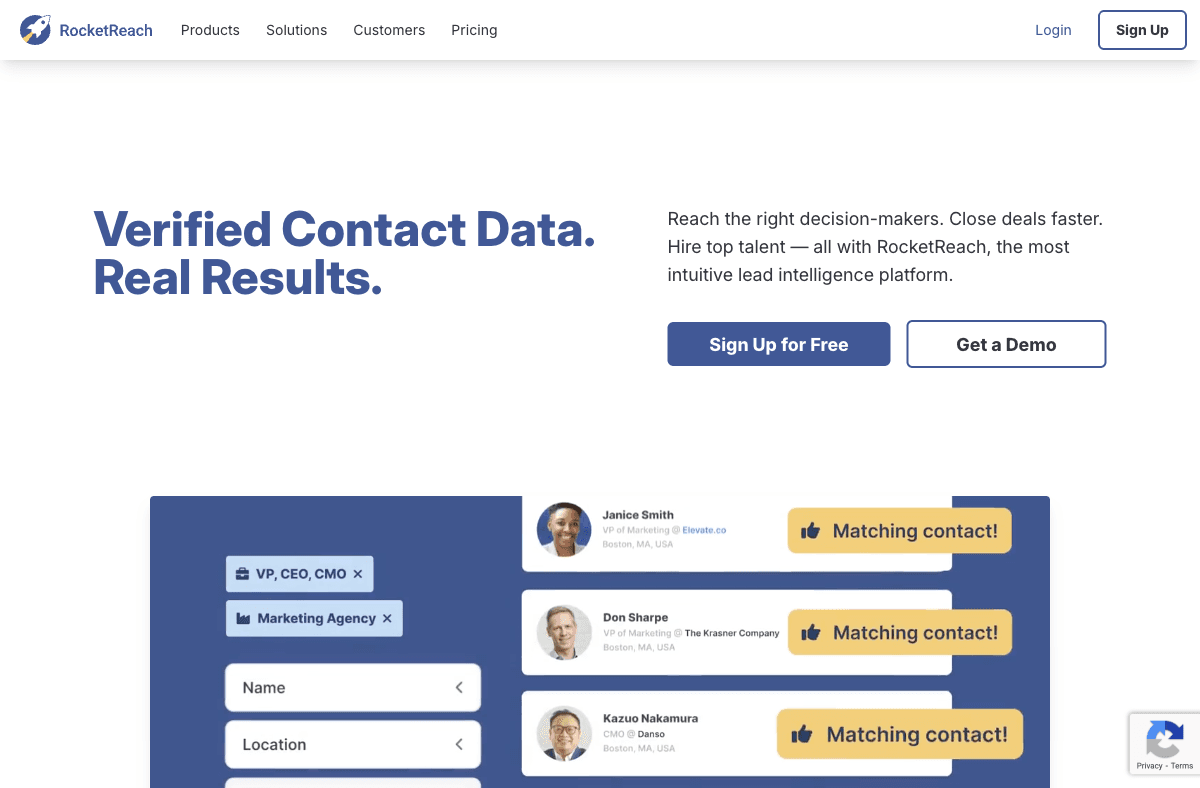
RocketReach provides a wide contact database covering both emails and phone numbers with simple plans starting around $39 per month. It is a straightforward lookup tool without the complexity of a full platform. Coverage depth and data freshness vary by industry and seniority level, so it is best used alongside verification.
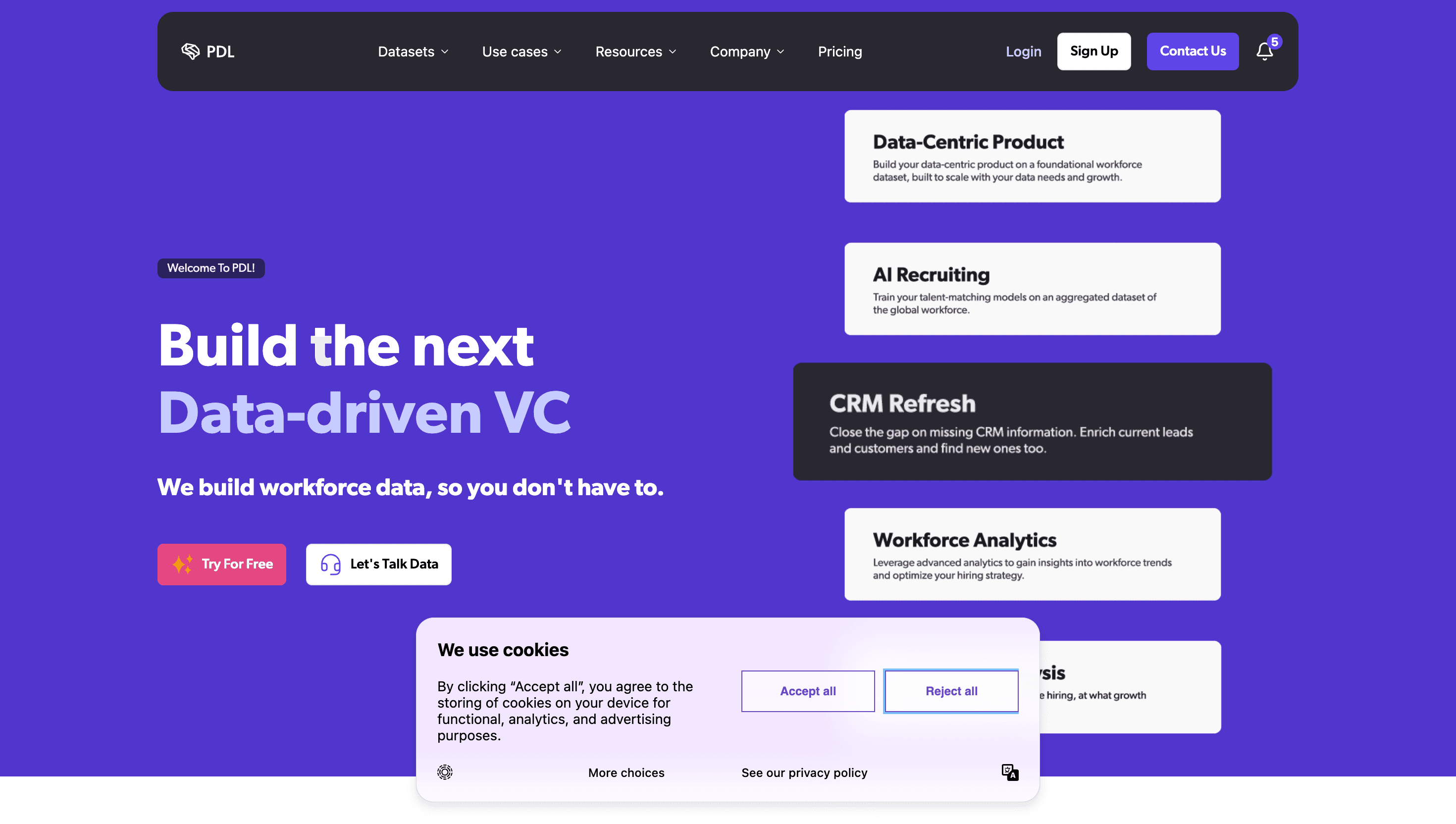
People Data Labs (PDL) provides massive raw datasets of person and company records through an API, designed for developers building their own data products, enrichment pipelines, or research tools. There is no UI; you access data programmatically and pricing is usage-based with custom enterprise plans. It is not a fit for sales teams needing a browser tool, but for engineers who want to build on top of large-scale contact data, PDL is one of the deepest raw sources available.
Clay is a workflow builder that orchestrates waterfall enrichment across many providers, adds AI research steps, and works like a programmable spreadsheet for data teams. You can layer multiple providers, run AI-generated research, and push results to any CRM. The trade-off is a steep learning curve and costs that rise quickly with usage, starting from around $149 per month.
The right provider depends on your team size, target geography, and whether you need a UI-driven tool or a data API you can embed in your stack.
The B2B data market splits into distinct tiers: enterprise platforms with deep intent and enormous databases (ZoomInfo), all-in-one tools that pair data with sequences (Apollo, Cognism), and enrichment-first providers that prioritize accuracy and API fit (Enrich, UpLead, PDL). The right choice depends on your team size, target geography, and whether you need a UI-driven tool or a data API you can embed in your stack.
For teams whose core problem is contact accuracy, match rate, and clean email plus phone data across a mix of sources, Enrich is the most direct fit. It runs waterfall enrichment without requiring you to manage multiple vendor contracts, prices transparently per credit with no annual lock-in, and ships an API and MCP server that fits modern RevOps and AI-agent workflows. See Enrich pricing to start a trial.
The best B2B data provider depends on your specific needs. For most teams where match rate and clean email plus phone data is the core requirement, a waterfall enrichment tool like Enrich is the strongest pick because it combines multiple sources rather than relying on one database. For enterprise depth and intent data, ZoomInfo leads. For European outbound, Cognism is the top choice for phone-verified, GDPR-compliant data.
Several providers offer free tiers: Apollo, Lusha, Seamless.ai, and Snov.io all let you start at no cost. Among paid plans, RocketReach and Enrich start from around $39 per month, and Hunter starts from around $34 per month for email-focused data. Pricing changes, so check vendor sites for current tiers before committing.
Accuracy varies significantly by provider, region, and data type. B2B contact data decays at roughly 30 percent per year as people change jobs, companies move, and email addresses expire. Providers that run real-time verification (UpLead) or waterfall enrichment across multiple sources (Enrich, Clay) tend to deliver higher accuracy than static single-source databases. Always test on a sample of your target accounts before buying in bulk.
Compliance posture varies. Cognism leads on GDPR and DNC screening with its Diamond Data tier. Enrich verifies emails as part of enrichment, which reduces sending to invalid addresses. Most major providers operate under a legitimate interest basis, but you should review each vendor's DPA and GDPR documentation before use, especially for EU campaigns.
Yes, and CRM enrichment is one of the highest-ROI uses of B2B data tools. Enrich integrates with Salesforce and HubSpot via API and can write enriched records back automatically. ZoomInfo and Cognism also offer CRM connectors. CRM enrichment lets you backfill missing fields and keep records fresh without manual research.
100 free API credits. No credit card required. Start enriching data in minutes.