BlogComparisons
10 Best Sales Intelligence Platforms

By Rahul LakhaneyPublished on: May 20, 2026 · 12 min read · Last reviewed: May 2026
On this page
TL;DR
Sales intelligence platforms differ enormously on data accuracy, intent signal quality, pricing, and stack fit. We rank the 10 best platforms in 2026 with honest pricing and a clear framework for choosing.
Sales intelligence platforms are supposed to tell you who to call, when to call them, and what to say. In practice, they differ enormously on data accuracy, intent signal quality, pricing, and how well they fit into your existing stack. This guide ranks the 10 best sales intelligence platforms in 2026 with honest pricing, real strengths and weaknesses, and a clear framework for choosing the right one for your team and budget.
Even the best intent signals and AI insights are only as useful as the contact data underneath them. A platform that surfaces a buying signal for a perfect-fit account is worthless if the email bounces and the phone number is wrong.
We evaluated each platform across six criteria:
Here is how the field compares at a glance:
| Tool | Best for | Starting price | Free plan | Intent data |
|---|---|---|---|---|
| Enrich | Data accuracy layer, email + phone | From ~$39/mo | Trial credits | No |
| ZoomInfo | Enterprise depth and Bombora intent | ~$15,000/yr | No | Yes |
| Apollo.io | All-in-one intelligence at scale | Free; from ~$49/seat/mo | Yes | Limited |
| Cognism | European phone-verified intelligence | Custom annual | No | Limited |
| 6sense | Predictive intent and ABM | Enterprise, custom | No | Yes |
| Lead411 | Verified data plus intent, mid-market | From ~$99/mo | Trial | Yes |
| LeadIQ | LinkedIn capture with CRM sync | Free; from ~$45/mo | Yes | No |
| Lusha | Fast browser-based prospecting | Free; from ~$49/mo | Yes | No |
| Clearbit / Breeze | HubSpot-native enrichment and reveal | HubSpot bundle | Tier-based | Limited |
| Clay | Flexible data workflows plus AI | Free; from ~$149/mo | Yes | Via providers |
Enrich is the pick we recommend evaluating first, not because it is the deepest intent platform (it is not), but because accurate contact data is the layer every other piece of sales intelligence depends on. Enrich runs waterfall enrichment: for each contact it queries multiple data providers in sequence and returns the first verified result. That produces higher fill rates and lower bounce rates than any single-source database, and every record comes back with both email and phone in one CRM-ready output.
For RevOps and sales teams that have found a gap between the intent signals they are paying for and the contact data they can actually act on, Enrich closes that gap. Pricing is transparent at around $39 per month with no annual contract, and the REST API and MCP server mean enrichment runs inside your existing workflows, scripts, and AI agents rather than requiring a separate platform login. Email verification is built into every enrichment call. To be direct about what Enrich is not: it does not provide Bombora-style intent signals, predictive scoring, or a built-in dialer. If you need those, pair Enrich with a platform like Lead411 or ZoomInfo for intent on top of clean data.
See Enrich pricing or compare Enrich vs ZoomInfo.
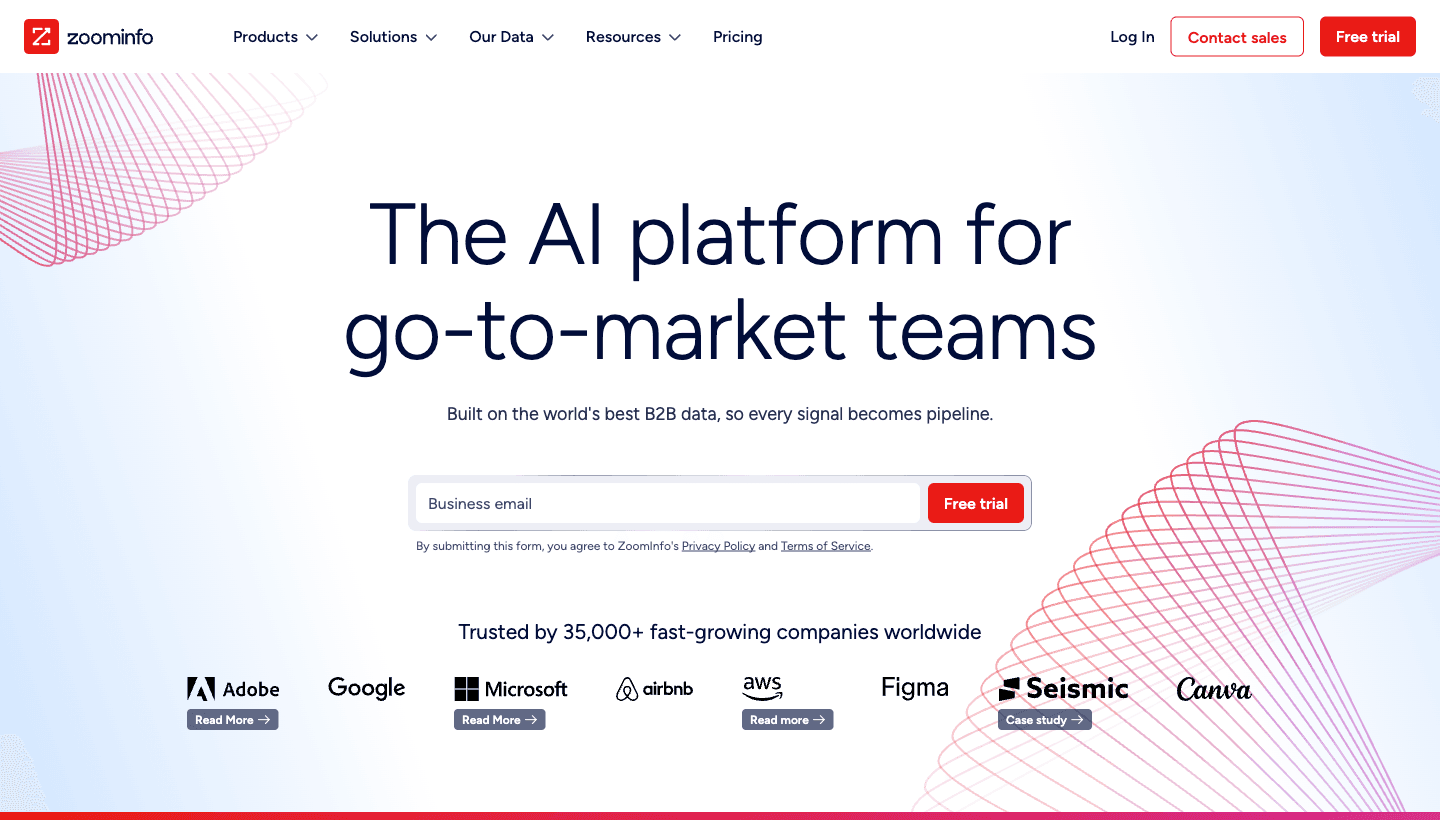
ZoomInfo is the reference standard for enterprise sales intelligence: the deepest North American contact database, Bombora intent data, technographics, org charts, and a full suite of engagement tools. If your team sells complex deals into large enterprises and needs to prioritize accounts by buying signals, ZoomInfo delivers a level of depth no other platform matches. The trade-off is substantial: pricing typically starts around $15,000 per year on annual contracts, the sales process is opaque, and the total cost climbs with add-ons.
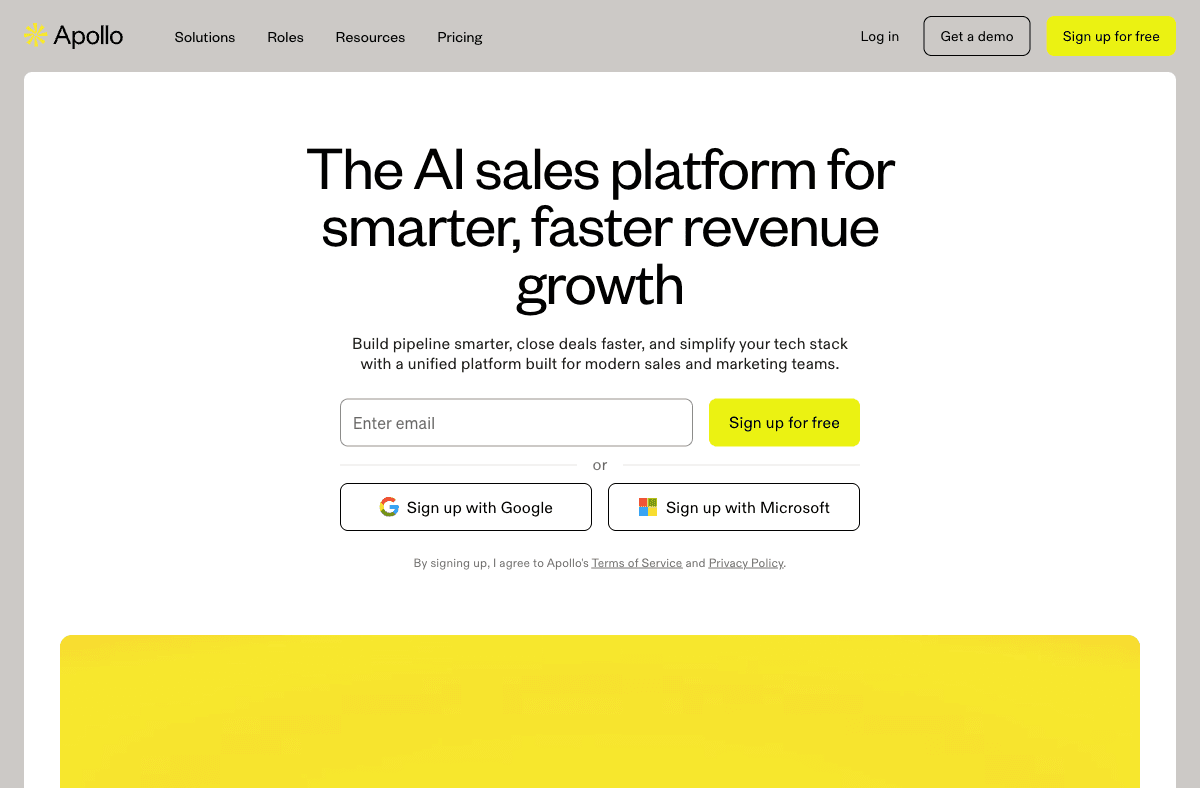
Apollo.io combines a 275M+ contact database, intent-lite features, email sequences, and a dialer into one platform at a price most mid-market teams can justify. The free tier is useful for evaluating data quality before paying. Apollo is US-strong; phone coverage and EU data are weaker than dedicated providers. Its intent signals are less sophisticated than ZoomInfo's Bombora integration.
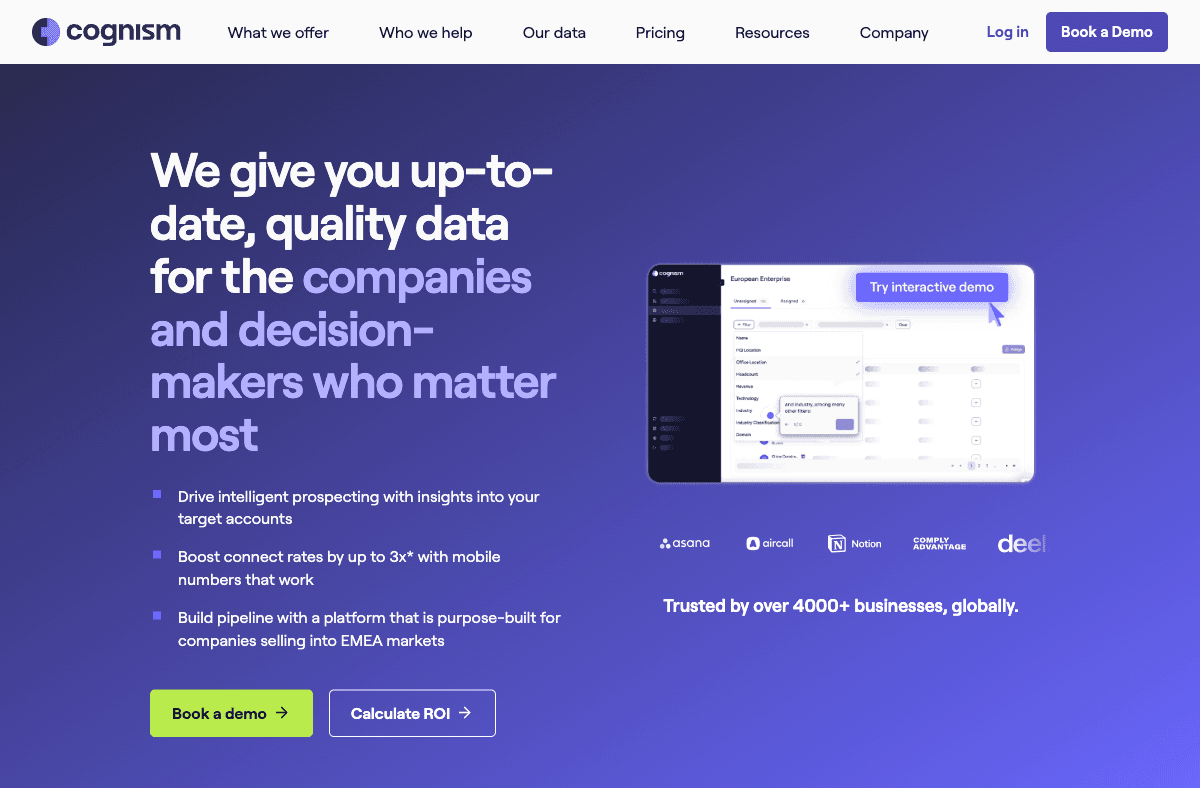
Cognism is the strongest platform for teams selling into the UK and Europe. Its Diamond Data tier provides human-verified mobile numbers with GDPR-first compliance and DNC screening built in, making it the most compliance-safe option for EU campaigns. Teams report strong mobile connect rates and low bounce rates in European markets. Pricing is custom and annual with no free plan.
6sense is an enterprise-grade predictive intelligence and ABM platform that combines account-level intent signals, AI-powered buying stage scoring, and advertising orchestration. It is the most sophisticated intent platform in the market, designed for enterprise teams with dedicated demand generation and ABM programs. Pricing is entirely custom and enterprise-scale.
Lead411 pairs verified contact data with intent signals at a price point below ZoomInfo, with plans from around $99 per month. It is the most accessible option for teams that want both data accuracy and buyer intent signals without an enterprise contract. Coverage is narrower than ZoomInfo or Apollo, but the combination of verification and intent at that price is competitive for mid-market outbound teams.
LeadIQ specializes in capturing prospect data directly from LinkedIn Sales Navigator and pushing verified records into your CRM and sequencer in one step. It has a free tier and paid plans from around $45 per month. The database is smaller than enterprise tools and intent features are limited, but for teams whose primary prospecting motion is LinkedIn-based, LeadIQ reduces the friction of manual data entry and CRM hygiene.
Lusha is a credit-based contact tool with a Chrome extension that surfaces emails and phone numbers directly on LinkedIn profiles. It has a free tier and paid plans from around $49 per month. It is not a full intelligence platform in the ZoomInfo or 6sense sense: it does not provide intent signals, org charts, or technographics. But for reps that need fast, accurate contact reveals while browsing LinkedIn, Lusha is among the most efficient tools available.
Clearbit, now embedded in HubSpot as Breeze Intelligence, enriches contact and company records automatically within HubSpot and powers form shortening and lead scoring. For teams whose primary workflow is HubSpot, it is the most seamless enrichment option. The trade-off is clear: it is a single-source enrichment tool within one ecosystem, not a standalone intelligence platform, and phone data coverage is limited.
Clay is a programmable workflow builder that orchestrates waterfall enrichment across many data providers, adds AI research steps, and connects to any CRM or sequencer. It can replicate many features of a full sales intelligence platform if you invest in configuring it. The learning curve is real and costs rise with usage, but for teams with technical RevOps or data engineering capacity, Clay offers more flexibility than any off-the-shelf intelligence platform.
The right platform depends on what is actually limiting your pipeline:
The sales intelligence market spans from data-accuracy tools (Enrich, UpLead) to full intent and ABM platforms (ZoomInfo, 6sense). The right choice depends on what is actually limiting your pipeline: if reps are reaching wrong emails and dead numbers, fixing the data layer comes first. If contact data is clean and you still cannot prioritize accounts, intent signals and predictive scoring are the next investment.
For teams starting with or fixing their data foundation, Enrich is the most direct fit: waterfall enrichment from multiple providers, email and phone in one record, transparent per-credit pricing with no annual contract, and an API and MCP server that fits modern workflows. Start with Enrich pricing or see the Enrich vs Apollo comparison to understand how the data layer fits your current stack.
The best platform depends on your priorities. For teams where contact data accuracy is the core gap, a waterfall enrichment tool like Enrich is the most direct fix. For enterprise depth and Bombora intent, ZoomInfo leads. For European campaigns with compliance requirements, Cognism is the strongest option. For predictive ABM at enterprise scale, 6sense is the market leader.
A contact database is the raw list of companies, contacts, emails, and phone numbers. A sales intelligence platform adds context: intent signals that show which accounts are in-market, technographic data about what software they use, org charts showing reporting lines, and predictive scoring that prioritizes accounts by likelihood to buy. Many platforms blur this line by including both database and intelligence features.
Compliance posture varies significantly. Cognism is the strongest for GDPR, with DNC screening and a GDPR-first data model. ZoomInfo and Apollo operate under legitimate interest frameworks but have faced European regulatory scrutiny. For EU campaigns, review each vendor's Data Processing Agreement carefully and consider whether their DNC suppression covers the specific countries you are targeting.
ZoomInfo leads on intent data through its Bombora partnership. 6sense is the most sophisticated for predictive intent and AI-powered buying stage scoring. Lead411 includes intent signals at a more accessible price point. Apollo includes basic intent features but they are less mature than ZoomInfo or 6sense. Most other platforms do not include native intent signals.
Yes. CRM enrichment is one of the most valuable use cases for sales intelligence tools. Enrich connects to Salesforce and HubSpot via API and enriches records automatically. ZoomInfo offers OperationsOS for CRM enrichment at the enterprise level. Clay can route enrichment from multiple providers to any CRM.
100 free API credits. No credit card required. Start enriching data in minutes.